

You’re comparing Freshdesk and Zendesk because your support team needs a better system. Maybe you’ve outgrown a shared inbox. Maybe your current tool promises automation but just adds configuration. Either way, you want a help desk that actually works for your store, not one that looks good in a demo and frustrates your team three months later.
Both platforms market ai customer service that resolves 80% of tickets. Merchants report 30 to 45% in practice. The real gap isn’t AI quality. It’s that both tools treat AI as an add-on to a ticketing system rather than building resolution into the core. When your AI can draft a reply but can’t check an order, process a refund, or update a subscription in one conversation, you’re paying for a smarter inbox, not actual resolution.
Let’s be upfront: we’re comparing Freshdesk and Zendesk here on the Engaige blog. We know our own product and we naturally have opinions. But we also know that what you need might be different from what we offer. That’s why we took this comparison seriously and based it on official sources, independent reviews and real merchant feedback.
Freshdesk and Zendesk at a glance
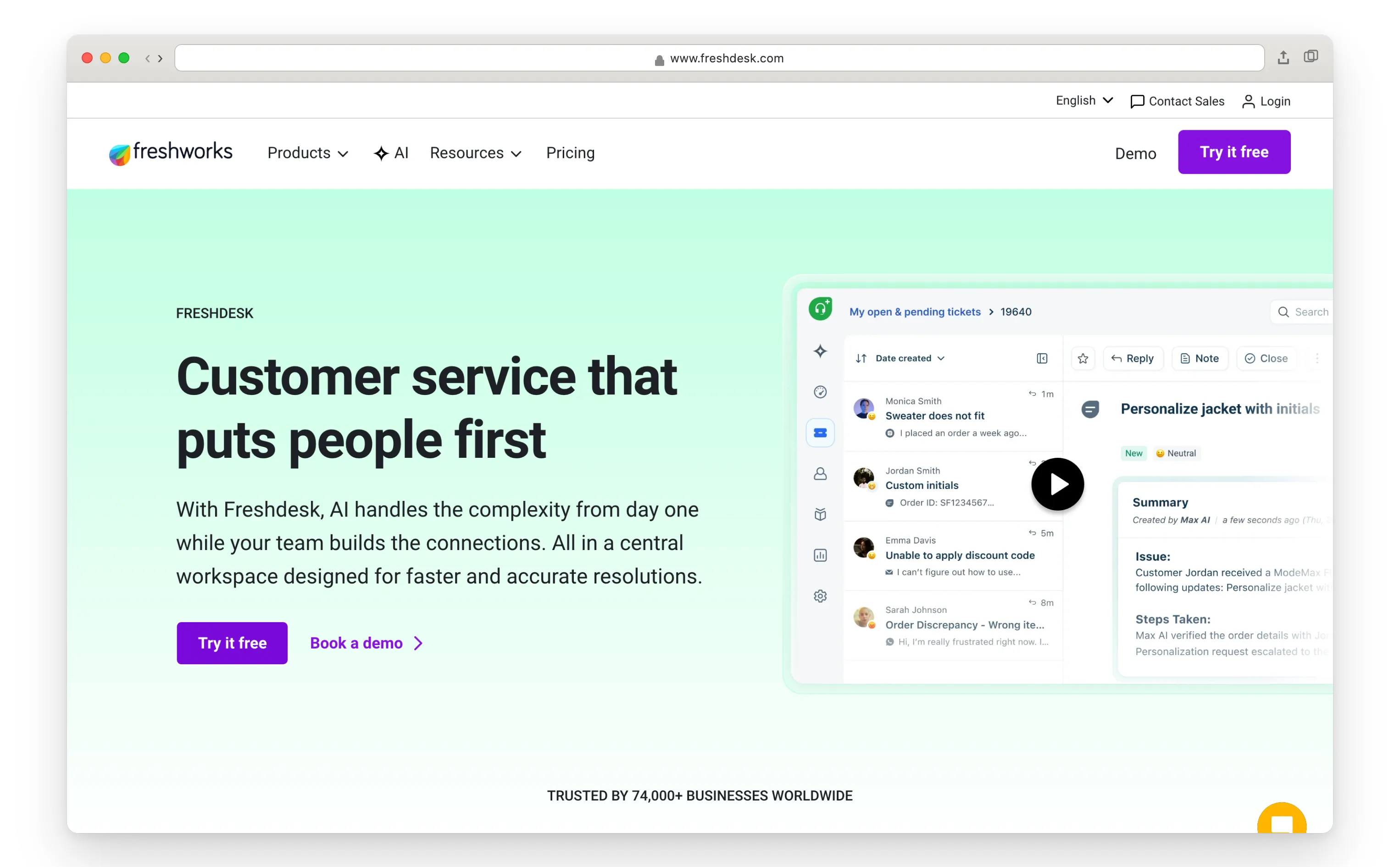
Freshdesk is Freshworks’ help desk platform, positioned as a simpler, more affordable alternative to Zendesk. It targets growing teams that want solid ticketing without enterprise complexity. Freshdesk offers a free tier for up to two agents, native Shopify integration, and Freddy AI with vertical e-commerce workflows introduced in late 2025. The tradeoff: its marketplace is smaller, the omnichannel suite costs significantly more than the base ticketing product, and real-world AI resolution falls well short of marketing claims.
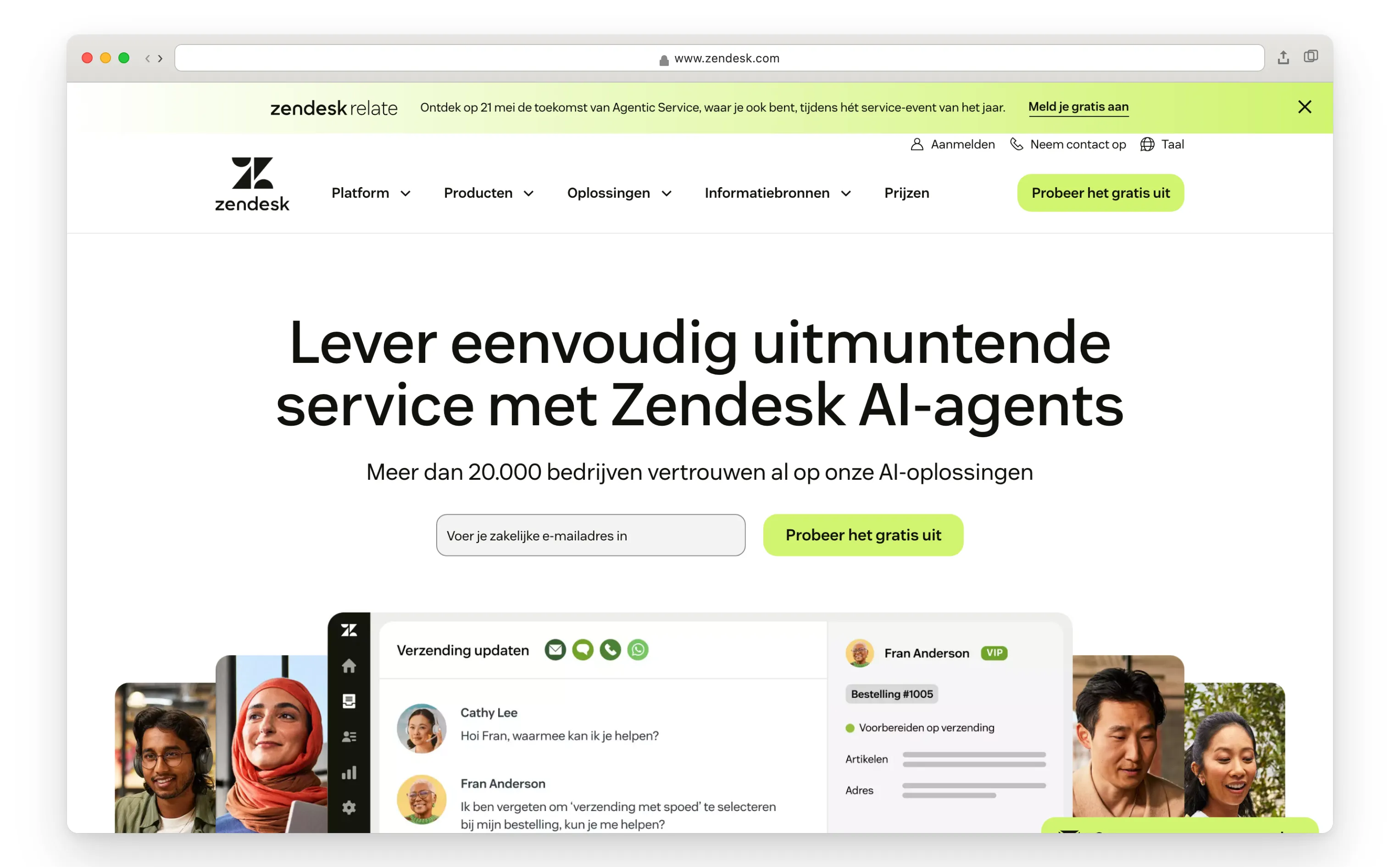
Zendesk is the category incumbent, now rebranded as the “Resolution Platform” following its March 2026 acquisition of Forethought. It targets mid-market to enterprise teams with a deep feature set, 1,800+ marketplace apps and broad channel coverage including LINE, WeChat and video calling. The tradeoff: pricing climbs fast once you add the Advanced AI add-on ($50/agent/month), and the platform can feel disconnected. As one merchant on r/SaaS put it, Zendesk gets described as “Frankenstein,” patched together from acquisitions, so the admin console, analytics and AI all feel disconnected from each other.
The practical divide comes down to simplicity versus extensibility. Freshdesk is easier to set up, cheaper at small scale, and offers native Shopify actions through Freddy AI’s prebuilt workflows. Zendesk is deeper in reporting, broader in integrations, and more configurable for complex support operations. But neither tool resolves the core e-commerce problem: chaining order lookups, return policies, refund processing and ticket closure in one autonomous conversation.
Here is how they compare across six key areas:
- Ease of implementation and integration
- Automation and AI capabilities
- E-commerce and omnichannel support
- Analytics, reporting and workforce management
- Pricing and scalability
- Customer support and training
Comparison table: Freshdesk vs Zendesk
| Category | Freshdesk | Zendesk |
|---|---|---|
| Ease of implementation and integration | ✅ Simpler setup, native Shopify, free tier available ❌ Smaller marketplace, WooCommerce third-party only | ✅ 1,800+ marketplace apps, broad SaaS and CRM integrations ❌ Steeper learning curve, complex admin console |
| Automation and AI capabilities | ✅ Freddy AI with 50+ prebuilt e-commerce workflows ❌ Real-world resolution 30–45%, complex workflow setup required | ✅ AI Agents, Copilot, Intelligent Triage, Voice AI, Action Builder ❌ Defaults to agent-approval for destructive actions, $50/agent add-on |
| E-commerce and omnichannel support | ✅ Email, chat, phone, WhatsApp, FB, Instagram, X, SMS ❌ Fewer channels overall, no LINE or WeChat | ✅ All Freshdesk channels plus LINE, WeChat, video, mobile SDKs ❌ E-commerce integrations require marketplace apps, not native |
| Analytics, reporting and workforce management | ✅ Freddy Insights included, solid standard reporting ❌ Less customisation depth, limited workforce tools | ✅ Deep customisable dashboards, workforce management suite ❌ Advanced analytics gated behind higher tiers and add-ons |
| Pricing and scalability | ✅ Free tier, ticketing from $15/agent/mo, lower entry cost ❌ Omni suite jumps to $29–$109/agent/mo, AI $100/1K sessions | ✅ Comprehensive suite at each tier, 1,800+ apps included ❌ Suite starts at $55/agent/mo, AI add-on $50/agent, $2 per overage resolution |
| Customer support and training | ✅ G2 4.4/5, Help Desk score 9.1/10, responsive support ❌ Fewer community resources than Zendesk | ✅ Extensive community, Zendesk Training, large knowledge base ❌ G2 4.3/5, Help Desk 8.7/10, support quality inconsistent at lower tiers |
How we reviewed both platforms
This comparison is based on how Freshdesk and Zendesk actually perform once they’re live in a support team. To get there, we looked at:
- Official product websites, documentation and pricing pages. Every pricing figure was captured directly from the source in April 2026.
- Independent review platforms including G2, Capterra and TrustRadius for aggregated ratings and individual reviewer feedback.
- Reddit communities (r/SaaS, r/shopify, r/ecommerce, r/CustomerService) for unfiltered merchant experiences published within the last 90 days.
- Product capability verification to confirm what each platform can actually do out of the box versus what requires custom development or third-party apps.
We then compared both platforms across the same six criteria we use when helping brands evaluate their support stack: how fast teams see value, whether the AI resolves or just assists, how well it understands e-commerce context, what visibility you get, what breaks as volume grows, and how much help you get along the way.
Freshdesk vs Zendesk: Key similarities and differences
Both platforms aim to streamline customer support, but they come from different starting points and make different tradeoffs. Freshdesk optimises for simplicity and affordability. Zendesk optimises for depth and configurability. In this section, we break down where they overlap, where they diverge and what those differences mean in practice.
Ease of implementation and integration
How quickly your team gets live shapes your first impression of any help desk. It also determines how much time you spend configuring instead of supporting customers.
Freshdesk offers a 14-day free trial across all paid plans, plus a genuinely free tier (up to two agents, though limited to six months). Setup is straightforward for basic ticketing. The Shopify integration is native, pulling order data directly into tickets. For WooCommerce merchants, the story is less polished: you’ll need third-party connectors. Freshdesk’s marketplace is growing but remains significantly smaller than Zendesk’s. If your stack relies on niche tools, you may find gaps.
Zendesk also offers a 14-day trial and positions itself as the more extensible platform. With 1,800+ marketplace apps, it connects to nearly every SaaS, CRM and productivity tool your team might use. That breadth comes at a cost: the admin console has a steeper learning curve, and merchants regularly describe it as complex. The Forethought acquisition in March 2026 added new AI capabilities, but it also means Zendesk is still consolidating multiple product surfaces into one coherent experience.
For teams also evaluating other options, our Gorgias vs Zendesk comparison covers how Zendesk stacks up against an e-commerce-native player.
👉 The verdict: Freshdesk gets you live faster for basic e-commerce ticketing, especially if you’re on Shopify. Zendesk gives you more room to grow into a complex, multi-tool support operation, but expect a longer ramp-up. If your team is small and your stack is straightforward, Freshdesk’s simplicity is a genuine advantage. If you need breadth across integrations from day one, Zendesk’s marketplace is hard to match.
Automation and AI capabilities
Both Freshdesk and Zendesk invest heavily in AI. The question isn’t whether they have it. It’s whether their AI actually resolves tickets or just makes your inbox slightly smarter.
Freshdesk’s Freddy AI splits into three products: AI Agent (an autonomous bot), Copilot ($29/agent/month add-on for agent assistance), and Insights (analytics). In November 2025, Freshworks introduced Vertical AI Agents with 50+ prebuilt agentic workflows for e-commerce, fintech, travel and logistics. For Shopify merchants, this means Freddy can execute backend actions through prebuilt Shopify and Stripe workflows: processing refunds, updating orders, checking shipping status.
The caveat is real-world performance. Marketing materials claim up to 80% resolution. Merchants and reviewers consistently report 30 to 45% in practice. Setting up the agentic workflows requires meaningful configuration, and the prebuilt templates don’t cover every edge case. Freddy is capable, but the gap between promise and practice is significant.
Zendesk’s AI is broader in scope. It includes AI Agents (Essential and Advanced tiers), Copilot, Intelligent Triage, Voice AI, and Action Builder for creating custom automated workflows. The March 2026 Forethought acquisition brought additional AI capabilities, and Zendesk now positions itself as a “Resolution Platform.” Action Builder lets you connect backend systems so the AI can take actions, not just suggest responses.
The limitation: Zendesk’s AI defaults to agent-approval for destructive actions. Processing a refund or cancelling an order typically requires a human to approve the AI’s recommendation before it executes. This is a deliberate design choice that prioritises safety over speed, but it means true autonomous resolution is limited. The Advanced AI add-on costs $50/agent/month on top of your suite pricing, and overage on automated resolutions costs $2.00 each. Suite Team plans include only five automated resolutions per agent per month.
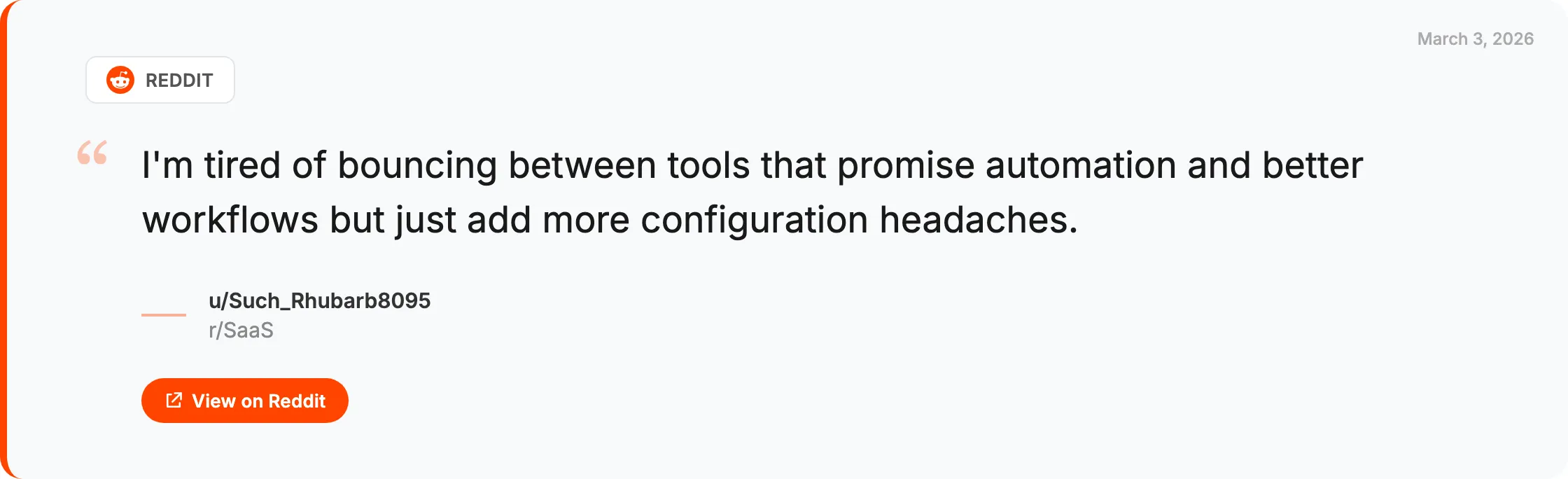
Merchants on r/SaaS see the pattern clearly. As one put it, they’re “tired of bouncing between tools that promise automation and better workflows but just add more configuration headaches.”
For a broader view of what best customer service software looks like in 2026, we cover the full landscape separately.
👉 The verdict: Freshdesk’s Freddy AI offers more prebuilt e-commerce workflows out of the box, which is an advantage for Shopify merchants who want faster time to value. Zendesk’s AI suite is more comprehensive and configurable, but the agent-approval default and steep add-on pricing slow down true automation. Neither achieves genuine end-to-end resolution for most e-commerce use cases. If you’re choosing between them purely on AI, Freshdesk is simpler to start with; Zendesk is more powerful to scale with.
E-commerce and omnichannel support
For e-commerce teams, the help desk needs to do more than route tickets. It needs to understand orders, connect to your store, and let agents (or AI) take action without switching tools.
Freshdesk covers the core channels: email, live chat, phone, WhatsApp, Facebook Messenger, Instagram, X (formerly Twitter), SMS and a knowledge base. Its Shopify integration is native, which means order data flows into tickets without third-party connectors. For Shopify merchants, this is a meaningful advantage over platforms that require marketplace apps for basic order visibility.
The limitation is scope. WooCommerce support is third-party only. There’s no LINE, no WeChat, no mobile SDKs and no video calling. For brands selling across Asia-Pacific or serving customers who prefer those channels, the gaps matter.
Zendesk covers all of Freshdesk’s channels plus LINE, WeChat, video calling and mobile SDKs. This makes it one of the broadest omnichannel offerings in the category. For global brands with customers across multiple messaging platforms, the channel coverage is a genuine differentiator.
The e-commerce depth, however, is less impressive. Zendesk’s Shopify and e-commerce integrations come through marketplace apps, not native connections. This means order data can surface in tickets, but the experience is less seamless than Freshdesk’s native Shopify integration. You’re relying on third-party app quality and maintenance rather than first-party support.
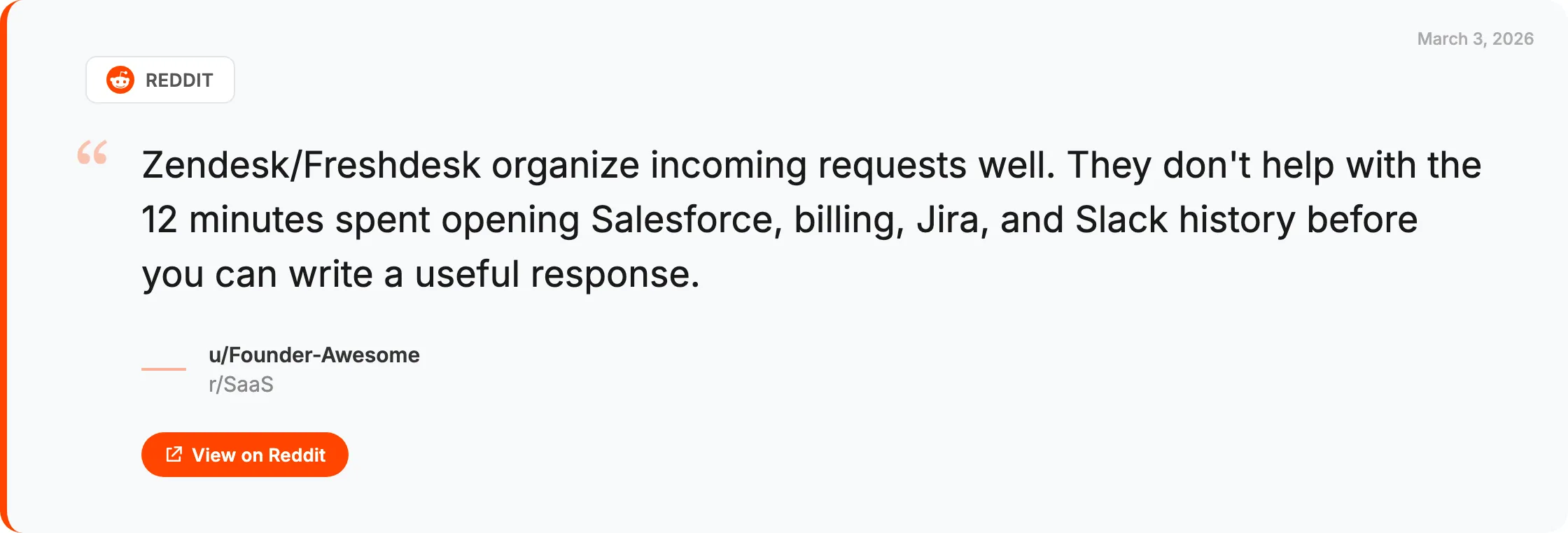
Another merchant on r/SaaS highlighted the fundamental problem both platforms share. They described how tools like Zendesk and Freshdesk “organise incoming requests well” but “don’t help with the 12 minutes spent opening Salesforce, billing, Jira and Slack history before you can write a useful response.”
If you’re also evaluating e-commerce-native options, our guide to Gorgias alternatives covers platforms built specifically for online stores.
👉 The verdict: Freshdesk wins on native Shopify integration. Zendesk wins on channel breadth, especially for global brands. Neither fully solves the e-commerce resolution problem: surfacing order data in a ticket is useful, but it’s not the same as an AI that can act on that data autonomously across your full stack.
Analytics, reporting and workforce management
Good reporting tells you what’s happening. Great reporting tells you what to change. The difference between the two often determines whether your support operation improves or just stays busy.
Freshdesk includes Freddy Insights as part of its AI suite, offering AI-powered analytics alongside standard reporting dashboards. The reports cover ticket volume, response times, resolution rates and agent performance. For most growing teams, the out-of-the-box reporting is adequate. Customisation options exist but aren’t as deep as Zendesk’s. Workforce management tools are limited compared to enterprise-grade alternatives.
Zendesk has the stronger analytics offering. Customisable dashboards, workforce management tools, and detailed performance tracking come standard at higher tiers. Zendesk Explore lets teams build custom reports with granular filters. The workforce management suite handles scheduling, forecasting and capacity planning, which is valuable for larger support operations.
The catch: the most powerful analytics features are gated behind Professional and Enterprise tiers. If you’re on Suite Team ($55/agent/month), the reporting is noticeably basic. Getting the full picture requires upgrading, which pushes your per-agent cost significantly higher.
👉 The verdict: Zendesk has the deeper analytics and workforce management suite, especially for teams with ten or more agents who need scheduling and forecasting. Freshdesk’s reporting is solid for growing teams that need clear visibility without enterprise complexity. If analytics drive your support strategy, Zendesk’s customisation justifies the higher cost. If you need adequate reporting without the overhead, Freshdesk delivers.
Pricing and scalability
Pricing is where both Freshdesk and Zendesk force difficult tradeoffs. Neither platform is simple to price at scale, and neither makes AI affordable without careful planning.
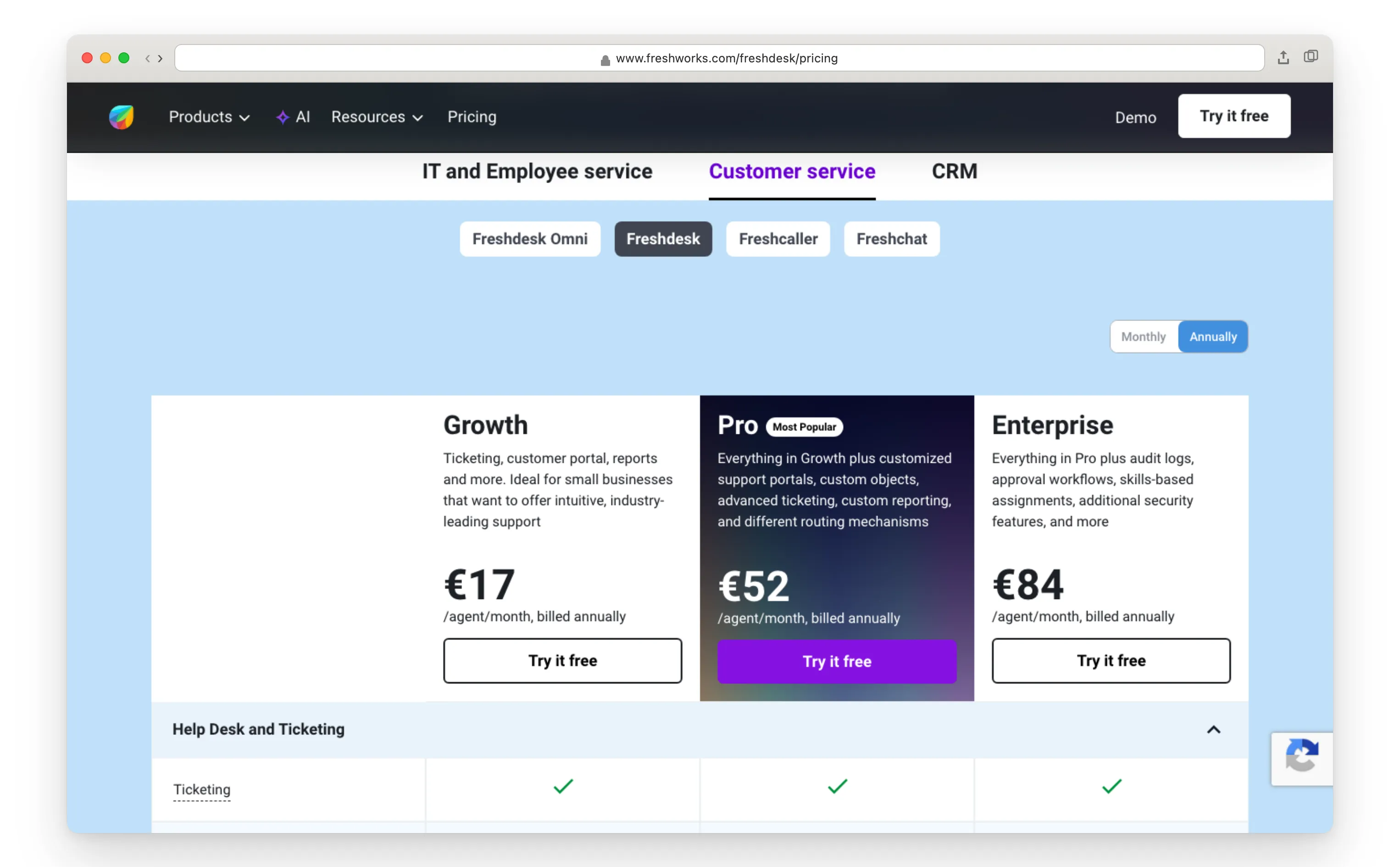
Freshdesk offers the lowest entry point. The free tier supports up to two agents (limited to six months), and the Growth plan starts at $15/agent/month on annual billing. Pro is $49 and Enterprise is $79 per agent per month. These prices cover ticketing only. If you want omnichannel support (chat, phone, social), you need the Omnichannel suite: Growth at $29, Pro at $69, Enterprise at $109 per agent per month.
AI pricing adds another layer. Freddy AI sessions cost $100 per 1,000 sessions, with 500 free sessions included on Pro and Enterprise plans. Copilot costs $29/agent/month. For a team of ten agents on the Omni Pro plan with Copilot, you’re looking at $980/month before AI session costs.
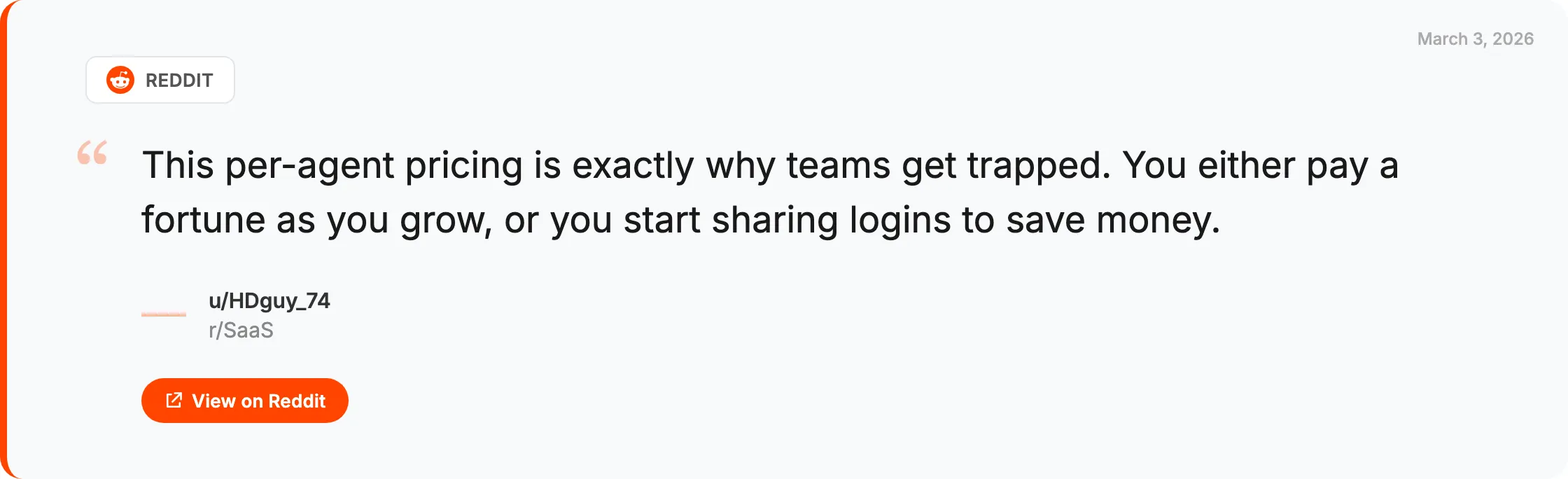
Merchants on r/SaaS see the per-agent model as a structural trap. As one noted, “This per-agent pricing is exactly why teams get trapped. You either pay a fortune as you grow, or you start sharing logins to save money.”
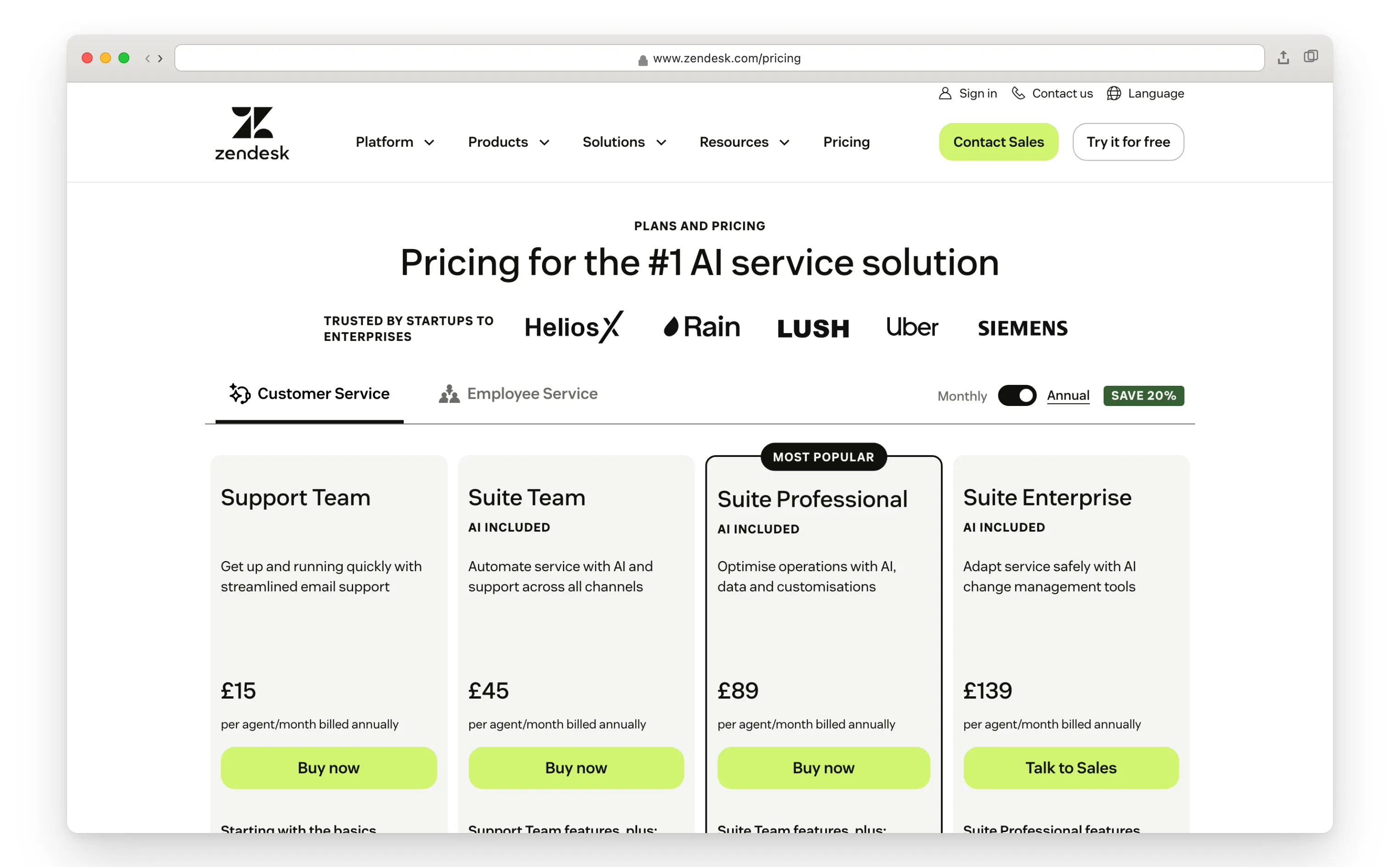
Zendesk starts higher. Support Team (ticketing only) is $19/agent/month. Suite Team is $55, Growth is $89, Professional is $115, and Enterprise is approximately $169 per agent per month. The Advanced AI add-on costs $50/agent/month on top of your suite plan. Automated resolution overages cost $2.00 each. Suite Team includes only five automated resolutions per agent per month, which is barely enough to test the feature.
For a team of ten agents on Suite Professional with Advanced AI, you’re at $1,650/month. Add overages from automated resolutions and the bill climbs further.
👉 The verdict: Freshdesk is meaningfully cheaper at small to mid scale, especially for teams that only need ticketing. Zendesk’s suite includes more out of the box at each tier, but the per-agent cost and AI add-on pricing make it expensive once your team grows. Neither platform offers truly predictable pricing at scale. Before committing, model your total cost at projected team size and ticket volume, including AI sessions and add-ons, not just the headline per-agent rate.
Customer support and training
The quality of support you receive from your help desk vendor matters more than most teams expect, especially during setup and when things break.
Freshdesk scores 4.4/5 on G2 with a Help Desk score of 9.1/10, both slightly above Zendesk’s ratings. The documentation is clear and the learning curve is manageable for standard configurations. Freshworks Academy offers free training courses. For teams that prefer self-service onboarding, the resources are adequate. Support response times are generally well-regarded.
Zendesk scores 4.3/5 on G2 with a Help Desk score of 8.7/10. Its community forum, Zendesk Training platform and extensive knowledge base create a large support ecosystem. For complex configurations, the depth of community-generated content is a genuine advantage.
The inconsistency is at lower tiers. Multiple merchants report that support quality varies significantly based on your plan level. Enterprise customers get dedicated account managers and faster response times. Suite Team customers report slower, less personalised support. For a platform built on the premise of great customer service, the irony isn’t lost on merchants.
👉 The verdict: Freshdesk delivers more consistent support quality across all tiers and scores higher on G2. Zendesk’s support ecosystem is deeper, but the experience is noticeably better for Enterprise customers than for smaller teams. If your team is mid-market and values responsive vendor support without paying Enterprise rates, Freshdesk has the edge.
Final verdict: Which help desk fits your e-commerce store?
There’s no universal winner here. The right choice depends on your team’s size, your tech stack, and how much you need from AI versus how much you’re willing to configure.
Choose Freshdesk if:
- You want the lowest entry cost for solid ticketing (free tier or $15/agent/month)
- You’re on Shopify and want native order data in every ticket without third-party apps
- Your team is small to mid-size and values simplicity over deep configurability
- You want prebuilt AI workflows for e-commerce without extensive setup
- Budget predictability at small scale is a priority
Choose Zendesk if:
- You need 1,800+ marketplace integrations across SaaS, CRM and productivity tools
- Your support operation is complex enough to benefit from workforce management and advanced analytics
- You serve customers across global channels including LINE, WeChat and video
- You have the budget for Suite Professional or Enterprise plus the AI add-on
- Extensibility and long-term scalability outweigh short-term setup complexity
Where both fall short:
Neither platform fully solves the core problem e-commerce merchants face: getting AI that chains together order lookups, return policy checks, refund processing and ticket resolution in one autonomous conversation.
Freshdesk’s Freddy AI offers prebuilt e-commerce workflows, but real-world resolution sits at 30 to 45%. Zendesk’s AI is more configurable, but it defaults to agent-approval for destructive actions, limiting true autonomy. Both tools market 80% resolution rates. Both fall well short in practice.
The fundamental issue isn’t AI quality on either side. It’s architecture. Both platforms bolt AI onto a ticketing system rather than building resolution into the core. For e-commerce teams evaluating ai customer service tools, this matters: when the AI can’t check an order, look up a return policy, process a refund and close the ticket in one conversation, your team still handles the handoff.
For teams exploring Zendesk alternatives or considering a different approach entirely, the gap between promise and practice is the critical factor.
Engaige: A better way to resolve tickets end-to-end
That’s where Engaige comes in, and yes, that’s us 😊
Neither Freshdesk nor Zendesk can chain helpdesk, e-commerce, returns and subscriptions in one autonomous conversation. As ai agents for ecommerce go, both fall short of true resolution. Freshdesk’s Freddy AI can execute some Shopify actions, but it requires complex workflow setup and delivers 30 to 45% real resolution. Zendesk’s AI defaults to agent-approval for destructive actions. Both leave your team handling the work the AI was supposed to do.
Engaige works alongside both platforms as a layer that connects your full e-commerce stack. Set up your workflows, define your support policies and connect your tools in days, not months. The AI manager lets you test every policy and simulate real conversations before going live. You launch fast and launch confidently.
Once live, the AI handles full conversations end-to-end. It understands the customer’s intent, checks the order status, looks up the return policy, issues the refund and resolves the ticket. One conversation, no custom API development, no human in the loop for routine requests. Engaige connects natively to Shopify, Loop, Returnless, Rever, ReturnGo, Recharge, Skio, Monta, Picqer and more.
Otrium, a fashion e-commerce brand handling 120,000 tickets per year, achieves a 65% autonomous resolution rate with 60% faster response times using Engaige.
FAQs about Freshdesk vs Zendesk
Below are answers to the most common questions merchants ask when choosing between Freshdesk and Zendesk for their support stack.
Is Freshdesk or Zendesk cheaper overall?
Freshdesk is cheaper at small to mid scale. Ticketing starts at $15/agent/month versus Zendesk’s $19 for Support Team or $55 for Suite Team. Freshdesk also offers a free tier for up to two agents. However, costs converge as you add omnichannel features and AI. Freshdesk’s Omni Pro ($69/agent/month) plus Copilot ($29/agent/month) approaches Zendesk’s Suite Professional ($115/agent/month) plus Advanced AI ($50/agent/month). Always model total cost at your projected team size and ticket volume, not just the starting price.
Does Freshdesk or Zendesk have better AI features?
Zendesk has the broader AI suite: AI Agents, Copilot, Intelligent Triage, Voice AI and Action Builder, plus the Forethought acquisition in March 2026. Freshdesk’s Freddy AI is more focused, with 50+ prebuilt vertical workflows for e-commerce. Zendesk’s AI is more configurable; Freshdesk’s is faster to deploy. Neither achieves true end-to-end resolution for e-commerce use cases. Both market 80% resolution rates that don’t hold up in practice.
Is Freshdesk really free?
Freshdesk offers a free tier, but it’s limited. You get up to two agents for a maximum of six months. After that, you need to upgrade to a paid plan. The free tier covers basic ticketing only: no omnichannel support, no AI capabilities, no advanced automation. It’s useful for testing the platform or running a very small operation, but it’s not a long-term solution.
Which is better for small e-commerce businesses?
For small Shopify-based e-commerce teams, Freshdesk has the edge. Native Shopify integration, lower per-agent pricing and simpler setup make it faster to get live. Zendesk’s strengths, like its marketplace breadth and workforce management, become more valuable as your operation grows beyond ten agents. If you’re under five agents and primarily on Shopify, Freshdesk’s Growth plan ($15/agent/month) gets you solid ticketing with order context at a fraction of Zendesk’s Suite pricing. If you need a shopify ai agent that resolves tickets end-to-end rather than just routing them, Engaige works alongside both platforms.
Can I migrate from Zendesk to Freshdesk?
Yes. Freshworks offers migration tools and documentation for moving from Zendesk to Freshdesk. You can import tickets, contacts and knowledge base articles. The process requires planning, particularly around custom fields, automation rules and integration reconfiguration. Allow two to four weeks for a full migration depending on your data volume and workflow complexity. Test thoroughly before cutting over.
What’s the best alternative to both Freshdesk and Zendesk?
If neither platform resolves tickets the way your team needs, consider ai agents for ecommerce that combine AI quality with native action execution. Engaige works on top of your existing helpdesk (including both Freshdesk and Zendesk) and adds end-to-end resolution: the AI checks orders, looks up policies, processes refunds and closes tickets in one conversation. Otrium achieves 65% autonomous resolution across 120,000 annual tickets using this approach. Other options include Gorgias (e-commerce-native, Shopify-focused), Intercom (strong AI, weaker on e-commerce actions) and Gladly (people-centred approach).
Do I need AI add-ons from day one?
Not necessarily. Both platforms work well as traditional help desks without AI features. Start with the core product, learn how your team handles tickets, and identify which repetitive tasks would benefit most from automation. Then evaluate the AI add-ons against your actual ticket patterns. For Freshdesk, the Pro plan includes 500 free AI sessions to test. For Zendesk, Suite Team’s five automated resolutions per agent per month is barely enough to evaluate. A focused pilot on your top three ticket types gives you better data than enabling AI across everything at once.
Can Engaige work alongside Freshdesk or Zendesk?
Yes. Engaige is designed to work as a layer on top of your existing helpdesk. It integrates natively with both Freshdesk and Zendesk, so you don’t need to replace your ticketing system. Engaige connects to your e-commerce stack (Shopify, Loop, Returnless, Recharge, Skio and others) and handles the resolution chain that neither platform manages autonomously. Your agents keep their familiar inbox while Engaige resolves routine tickets end-to-end in the background.


