

AI is changing the way customer service works, but not every tool can actually solve your customer’s problem from start to finish. In this article, we break down the 10 best customer service software platforms with AI live support: what they’re great at, where they struggle, and when it’s worth going for a true AI agent like Engaige.
AI support tools are everywhere, but most e-commerce support teams quickly find out that an AI add-on alone won’t cut it. While many helpdesks now offer built-in AI features, they often lack the depth, flexibility, and integrations required to actually resolve customer queries. The result? Missed automation targets, frustrated customers, and more manual work than expected.
In this guide, we compare the 10 best customer service platforms with AI live support:
- Engaige
- Zendesk AI
- Intercom Fin AI
- Freshworks with Freddy AI
- Gorgias AI
- Kustomer (Meta)
- Tidio + AI
- Helpshift
- Gladly AI
- Ada
We highlight what each tool does best, what to watch out for, and why more and more support leaders in e-commerce are making the move to standalone AI agents like Engaige.
How does AI live support software work?
AI live support software helps customer service teams respond to customers faster and handle more requests by using artificial intelligence to assist human agents or even automate certain replies. Why this matters: The type of solution you choose has a big impact on how much of your workload you can automate and whether your customers get instant resolutions or end up waiting for a support agent. That being said, most tools fall into two categories:
- AI add-ons within helpdesks: These tools assist agents by drafting replies, summarising conversations, or handling simple queries. They typically rely on the helpdesk’s existing data and logic, but they lack a deeper integration with your support tech stack.
- Standalone AI agents: These are purpose-built to fully resolve tickets by integrating with your tools, understanding your business logic, and taking actions like processing returns, updating orders, or checking stock levels.
The difference? One supports your agents. The other acts like your agents. The more you move past basic AI features, the more tickets you can automate without sacrificing customer experience.
10 Best customer service software with AI live support
Now that we’ve clarified the difference between an AI add-on and an AI agent, let’s take a closer look at the top solutions available.
1. Engaige
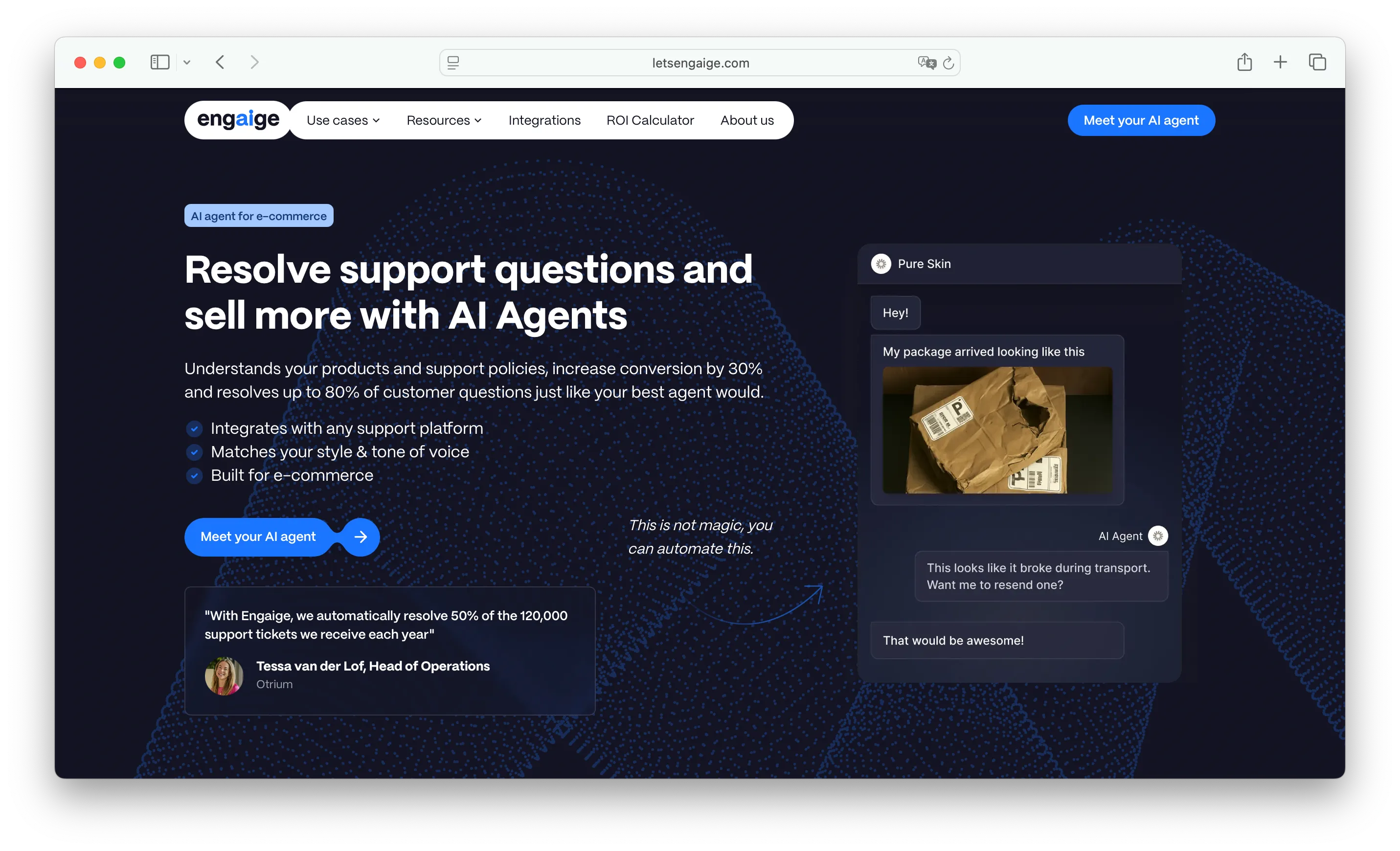
Meet Engaige 👋, an AI agent built specifically for e-commerce support teams. Unlike AI add-ons that only assist, Engaige can fully resolve tickets, making it more than just a helper. It integrates with your customer service tools, order management systems, and product catalogue, and even follows your company’s policies, to act just like a human team member.
For example, if a customer wants to exchange an item, Engaige can check if it’s eligible, process the exchange, update the order, and confirm it with the customer, all without human input. Or if a customer wants to know when a specific size is back in stock, it can instantly pull that information from your inventory system and even offer product alternatives.
Product highlights
- Handles up to 80% of common customer queries automatically
- Custom policy builder so replies match your company’s way of working
- Links with your product catalogue to give detailed, product-specific answers
- Deep integrations with your favourite CS tools like Shopify, Mollie, UPS, and others
- Remembers context for smoother, more natural conversations
- Always-on support that feels like help from a real team member
Strengths
- Cuts down repetitive workloads so your team can focus on higher-value tasks
- Full visibility and control over how the AI responds
- Happier customers and more conversions thanks to faster, more relevant answers
- Lower customer service costs without compromising quality
Limitations
- Needs some initial setup and training, but that’s what makes the answers accurate and reliable
So in short, why choose Engaige? If your goal is to automate more tickets without compromising quality, Engaige’s AI agent is your best bet. It gives you full control, deep integration, and smart resolution capabilities, making it much more than just a basic chatbot or AI add-on.
2. Zendesk AI
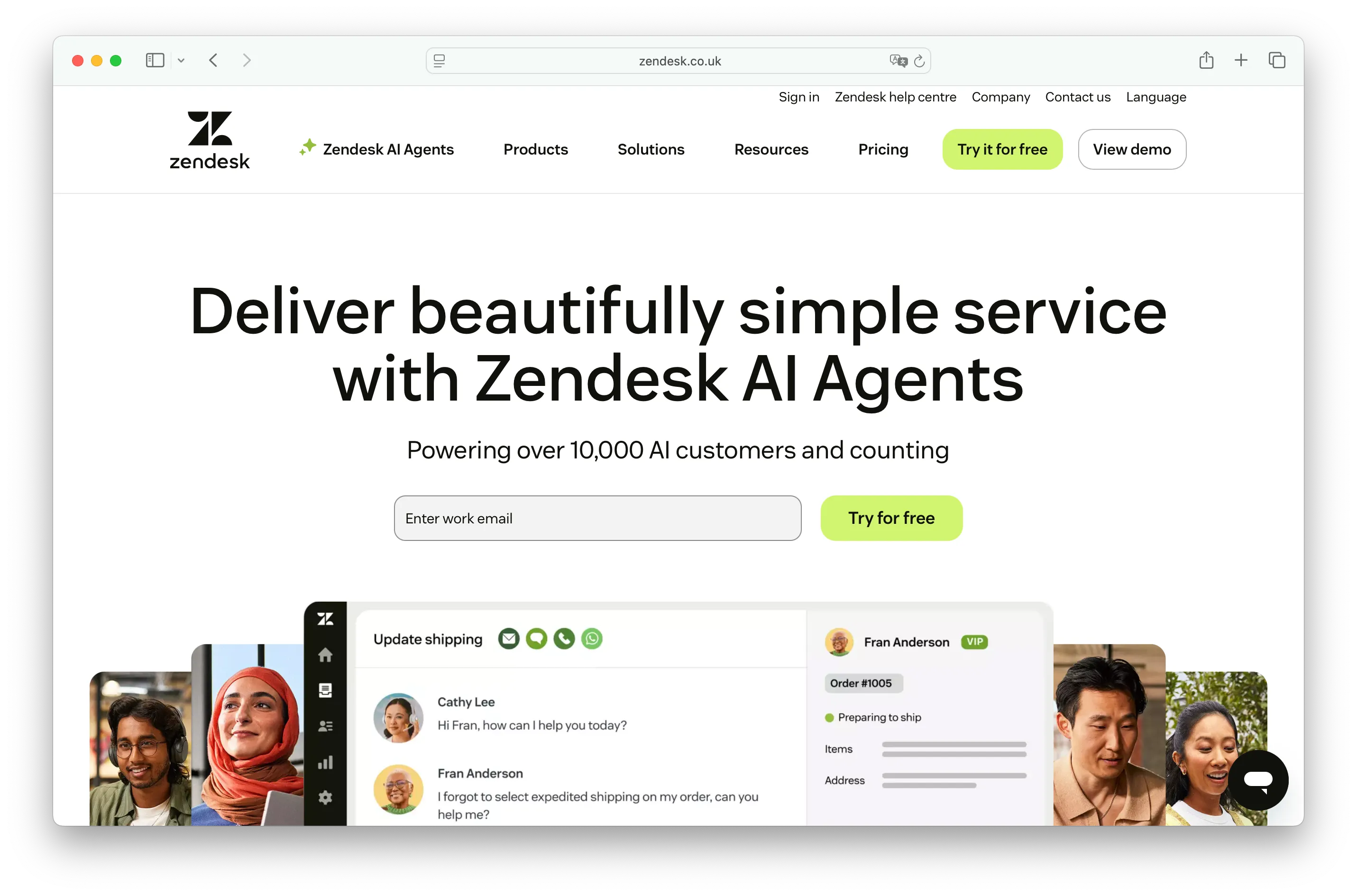
Zendesk’s AI agents are built into the Zendesk Suite, offering features like intent detection, generative reply suggestions, and automated triage. It’s a popular option for teams already working within the Zendesk ecosystem. If a customer asks about a delivery delay, Zendesk AI can draft a reply using the latest tracking information from the helpdesk. In most cases, agents still need to review and adjust the response before sending.
Strengths
- Familiar interface for Zendesk users
- Effective for categorising tickets and supporting agents with suggestions
- Supports multiple channels (email, chat, social, voice) and languages
- Strong analytics and oversight
Limitations
- Advanced AI features require the paid add-on, and pricing is based on usage, so costs can add up for high-volume teams
- Customisation and integrations can be more rigid and slower to adapt
- Limited in deep reasoning or multistep logic
- Not designed to act autonomously
This AI works well for support teams looking for extra help without changing their existing workflow. It helps agents respond efficiently across multiple channels, but full automation, advanced reasoning, or highly custom integrations may require additional investment.
3. Intercom Fin AI
Intercom’s Fin is an AI chatbot powered by Anthropic Claude, designed to handle FAQs and simple troubleshooting using your help centre content. It delivers fast, friendly responses while leaving more complex queries to your human agents.
Strengths
- Quick to deploy
- Great at answering FAQs and basic troubleshooting
- Links back to source articles
- Uses advanced language models
- Multichannel support
Limitations
- Limited connection to back-end systems
- No native support for complex workflows
- Customisation is limited
Fin is ideal for teams that want a quick, conversational solution for routine questions. It’s easy to set up, trustworthy, and keeps interactions aligned with existing workflows, though businesses needing deep system integrations or highly customisable workflows may want to consider other options.
4. Freshworks with Freddy AI
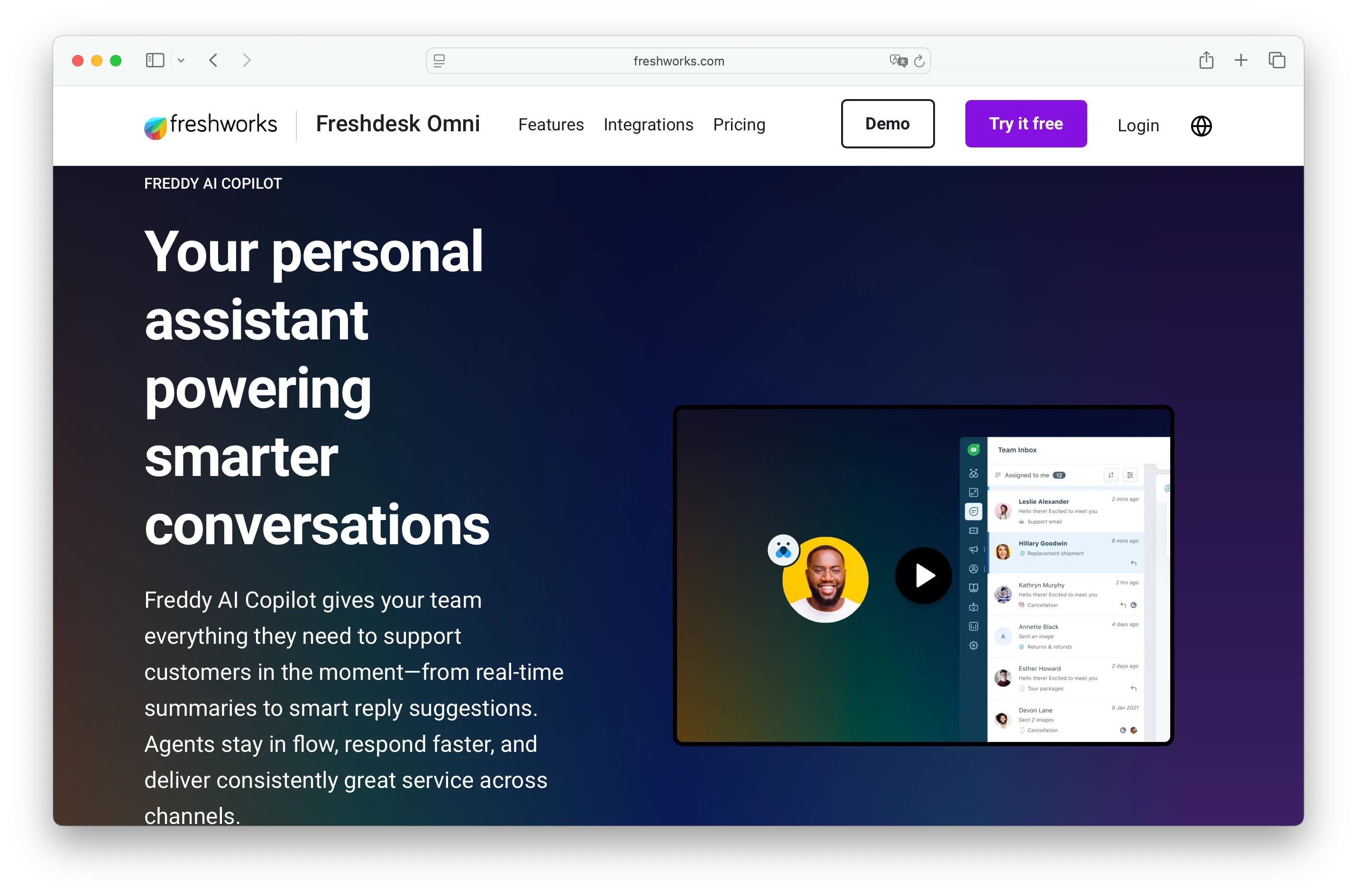
Tired of spending hours answering repetitive queries? Freddy AI could be the time-saving solution you need. This Freshworks’ built-in assistant, helps agents handle routine tasks more efficiently. It can summarise tickets, categorise issues, and suggest replies, allowing support teams to focus on more complex problems.
Imagine your customer emails you about a missing refund. Freddy might suggest a reply template, but it won’t be able to check the refund status or issue a new one.
Strengths
- Integrated within Freshworks, providing a unified experience
- Improves agent response speed with a summary and sentiment analysis
- Offers AI-powered suggestions for responses and solutions
- Supports multiple channels, including email, chat, and voice
- Provides insights into customer sentiment to prioritise tickets effectively
Limitations
- Lacks the ability to perform actions like processing refunds or accessing external systems
- Customisation options are limited compared to other competitors
- Advanced features may require additional configuration or higher-tier plans
Freddy AI is a useful tool for teams looking to improve agent efficiency and deliver consistent support across multiple channels. It may not have the depth of automation or customisation of some other platforms, but its integration within Freshdesk makes it a practical choice for existing users.
5. Gorgias AI
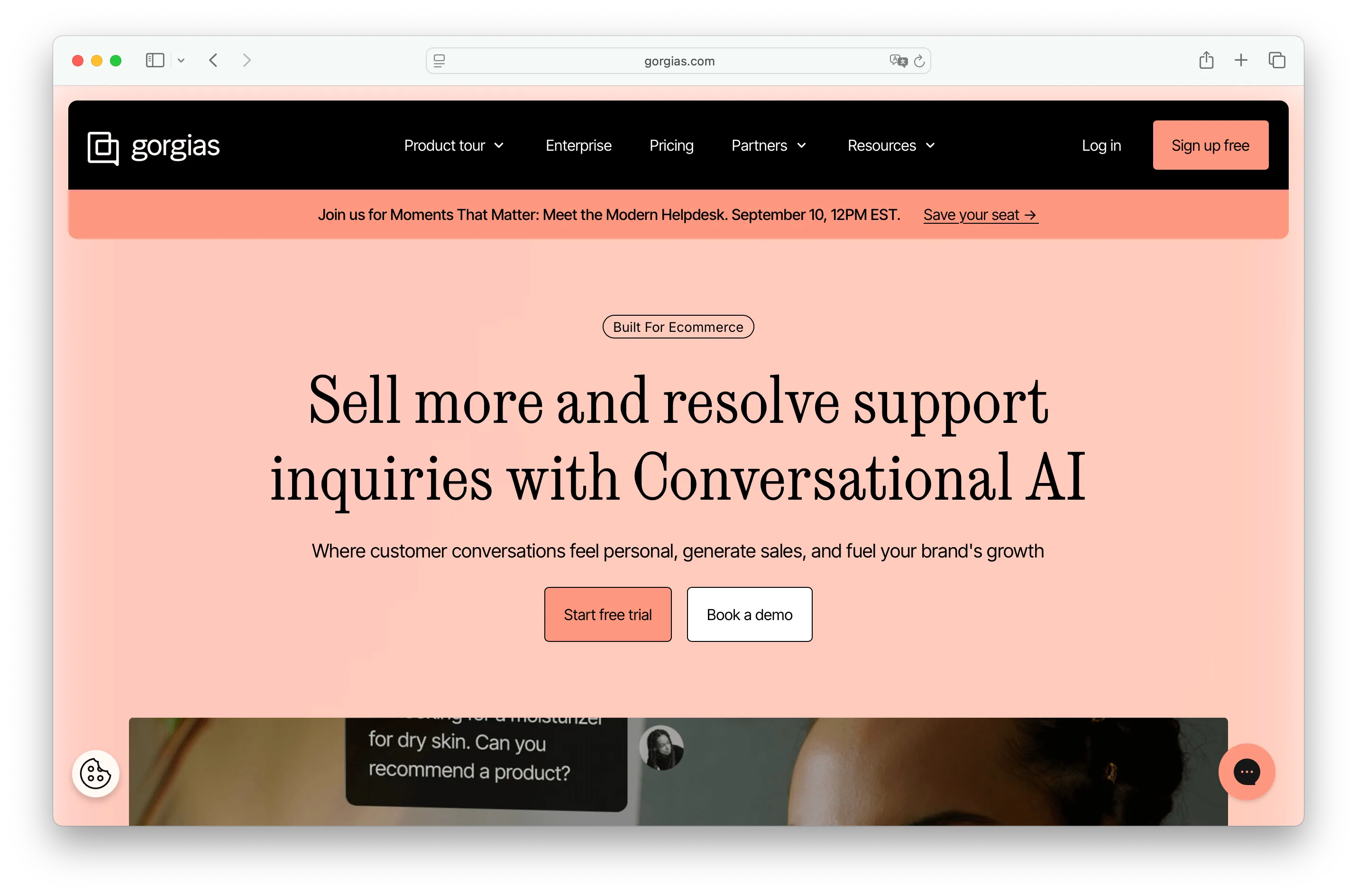
Gorgias is a customer support platform built for e-commerce businesses, especially those using Shopify. It offers AI-powered automation, such as rules-based workflows, suggested replies, and macros, helping teams respond quickly to common queries like shipping times.
Strengths
- Works well with Shopify
- Efficient for automating common inquiries and tasks
- Offers multichannel support across email, chat, and social media
- Provides analytics and reporting tools to monitor performance
Limitations
- AI reasoning capabilities are limited, especially for complex or unique issues
- Customisation options for AI behaviour are less flexible compared to competitors
- Primarily designed to assist with common queries rather than resolve complex problems
Gorgias is a good fit for e-commerce teams who need efficient handling of routine inquiries. Its Shopify integration and multichannel support make it practical for standard tasks, but businesses needing advanced AI reasoning or highly customised workflows may find it less suitable than other platforms like Engaige.
6. Kustomer (Meta)
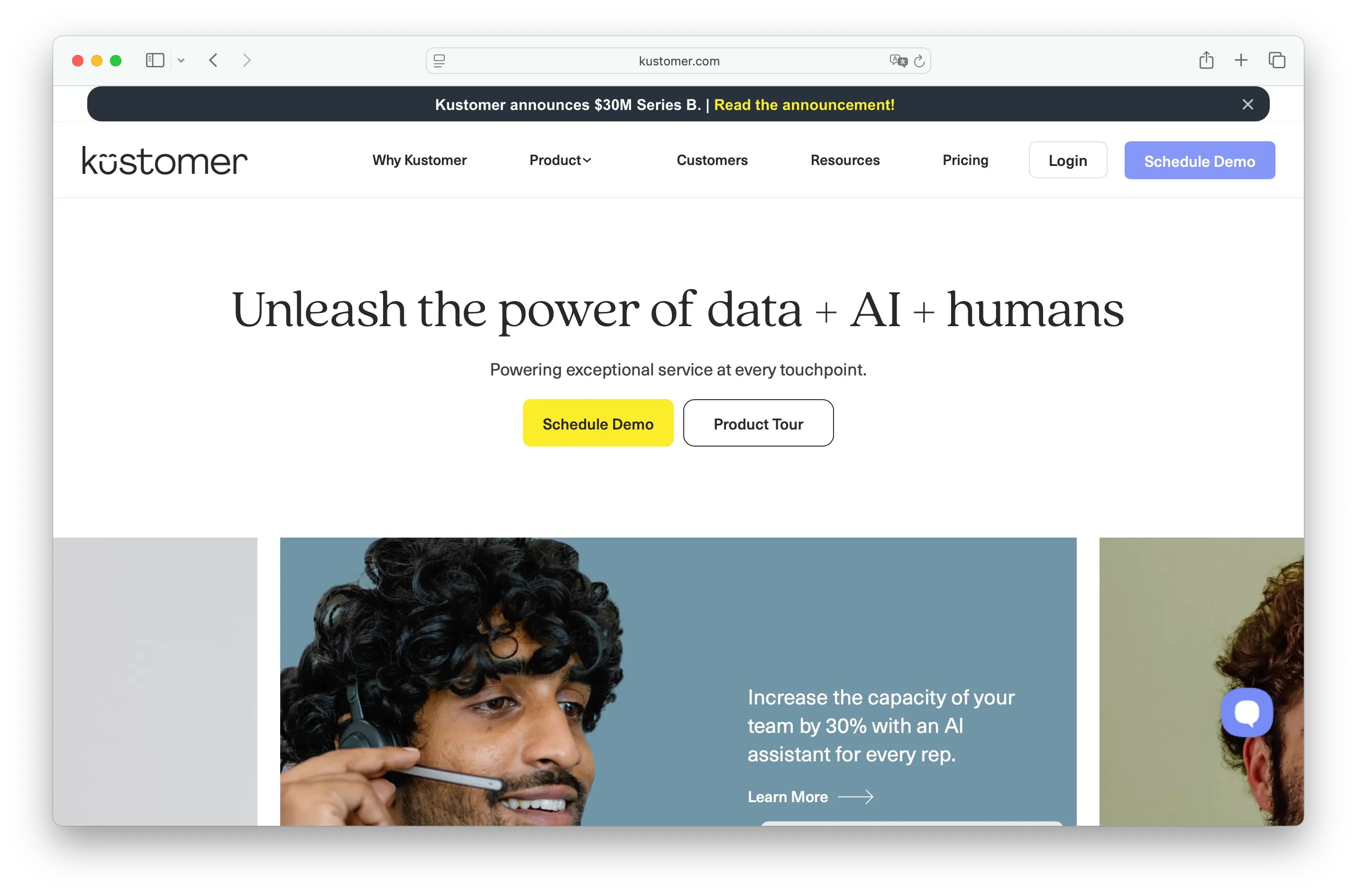
Looking for a single platform to manage all your customer interactions? Kustomer might be your solution. It’s a messaging-first customer service platform that brings together interactions across email, chat, and social media. Its unified timeline lets agents quickly see past interactions, enabling faster, more personalised responses. The tool is particularly useful for brands active on WhatsApp and Messenger.
Strengths
- Clear, unified view of customer data
- Strong integration with Meta products, including WhatsApp and Messenger
- Well-suited to retail and direct-to-consumer (DTC) brands
- Offers analytics and reporting tools to track performance
Limitations
- Requires agent involvement for certain tasks, so full automation isn’t possible
- AI customisation options are limited compared with others on this list
- Onboarding and setup can be complex, needing some technical know-how
- Not specifically built for e-commerce or fully autonomous ticket resolution
Kustomer works well for brands wanting a complete view of customer conversations. Strong Meta integrations and analytics help teams track interactions effectively, but businesses needing fully automated workflows, highly customisable AI, or e-commerce-specific tools may find it less suitable.
7. Tidio + AI
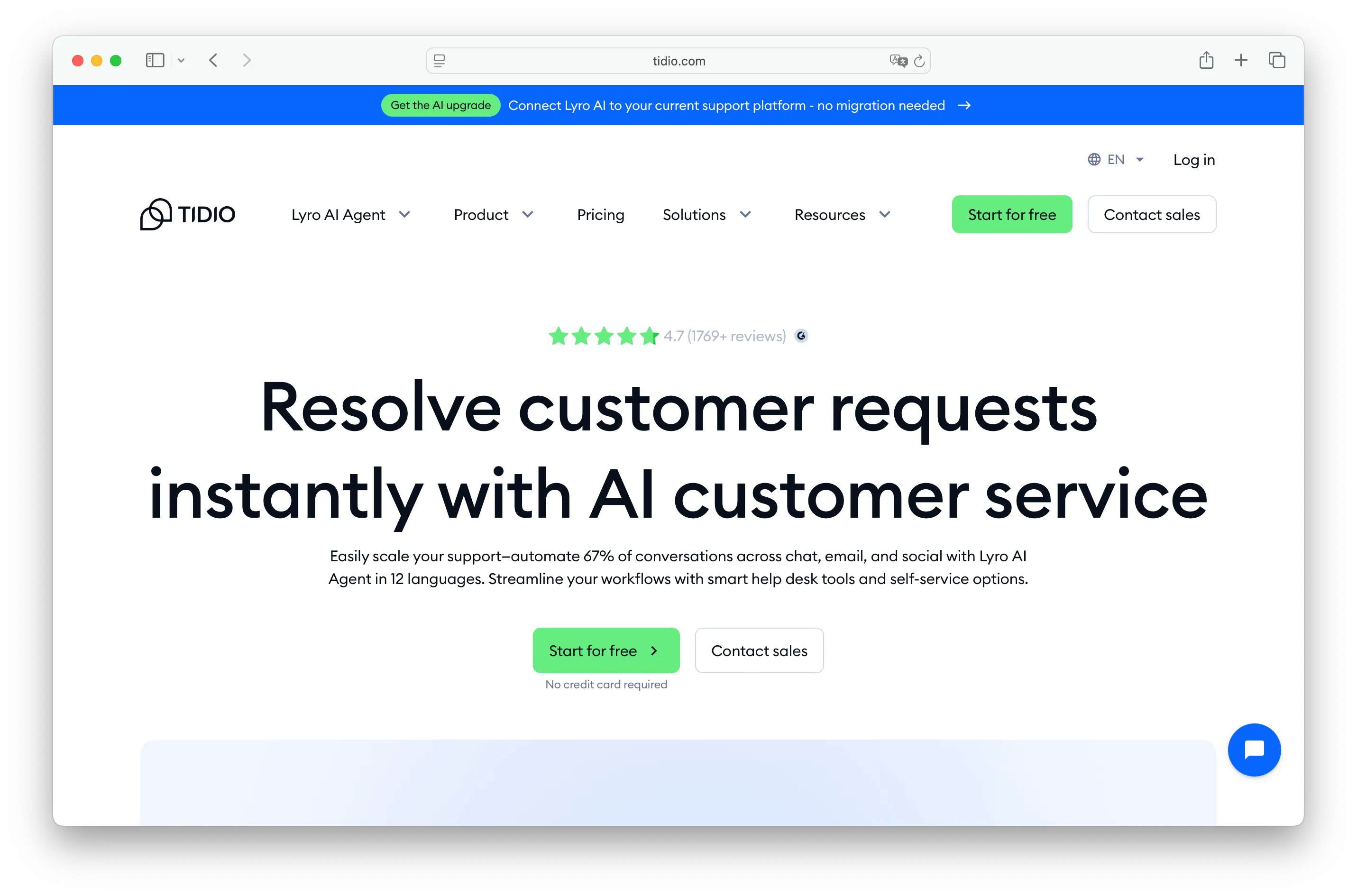
Tidio is a straightforward support platform for small businesses, combining live chat, AI chatbots, and multichannel messaging. Its AI, Lyro, can handle common queries such as store hours or order tracking, letting teams respond faster without needing constant oversight.
Strengths
- One of the most affordable options in this list
- Quick to install
- Built-in fallback to human agents
Limitations
- The AI chatbot is primarily designed for handling straightforward queries
- Offers limited options for customising AI behaviour and workflows
- No native support for complex workflows
- Doesn’t support business-specific actions
Tidio is ideal if you’re looking for an affordable, easy-to-use support tool for routine enquiries across multiple channels. For companies with more complex workflows, higher volumes, or plans to scale, its limited customisation and automation options may be restrictive.
8. Helpshift
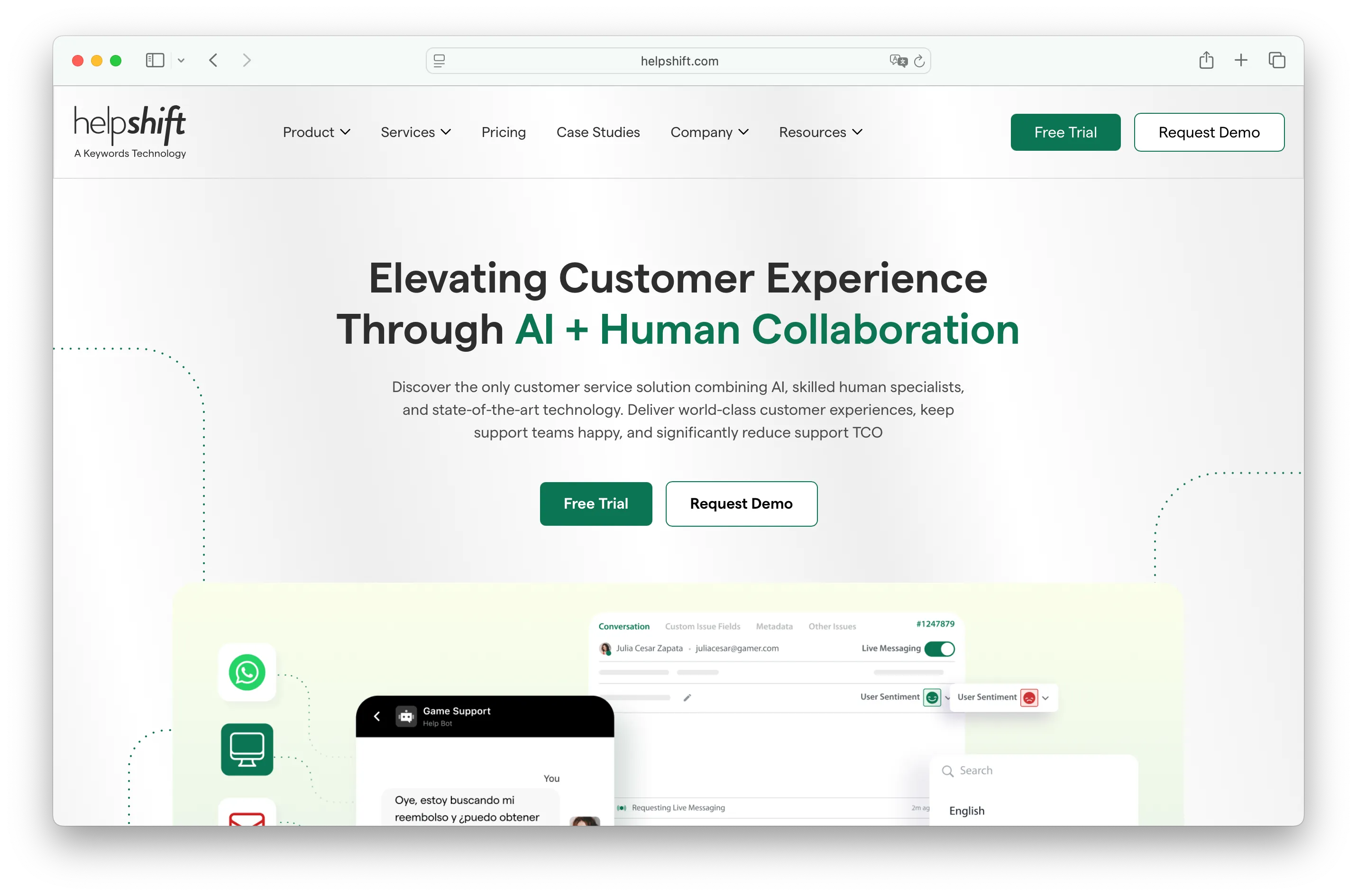
For mobile game developers and app-based businesses, Helpshift delivers support directly inside the app. Its AI-powered FAQs and in-app messaging help players get instant answers to common questions like in-app purchases or technical glitches.
Strengths
- Provides native in-app messaging, allowing users to seek help without leaving the application
- Designed with a mobile-first approach
- Strong FAQ automation
- Offers AI-powered translation tools
Limitations
- Offers fewer integrations with customer service tools compared to others on this list
- Lacks features tailored for e-commerce workflows, such as order management
- Primarily operates on rule-based automation
Helpshift excels at mobile-first, in-app support for games and apps. While it handles routine issues quickly, businesses requiring broader e-commerce support or complex automation may need a different solution.
9. Gladly AI
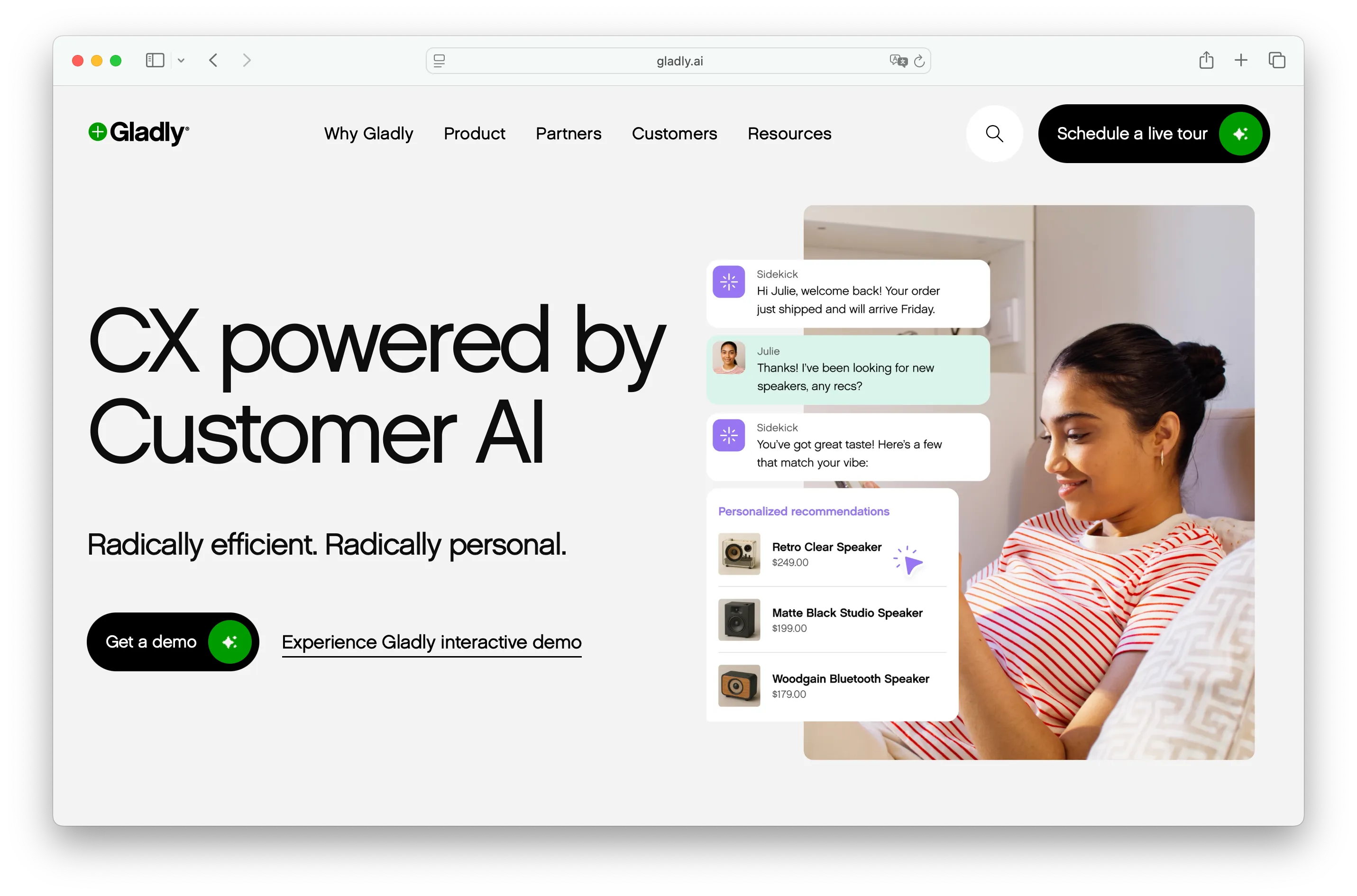
Gladly puts people at the heart of customer support, giving agents a clear view of every interaction across chat, voice, SMS, in-app messaging and social media. Its AI assistant, Sidekick, helps staff work smarter by suggesting responses, summarising conversations and automating routine tasks while keeping the human touch intact. When a returning customer asks about a past order, Gladly surfaces previous interactions to give agents context, but the agent still needs to review and send the response, as tickets aren’t resolved automatically.
Strengths
- Offers a unified view of customer interactions across multiple channels
- Supports a human-first approach, maintaining personalised customer service
- Provides tools for easy setup and continuous improvement
- Improves agent productivity with AI-driven suggestions and automation
Limitations
- Does not autonomously resolve customer issues; requires agent intervention
- Pricing may not suit all teams (higher compared to others in this list)
Ideal for teams that value personal, human-driven support, Gladly enhances agent efficiency without replacing them. If your business needs fully automated ticket resolution, it may not be the right choice.
10. Ada
Ada handles routine customer questions automatically, so your team can focus on the tricky cases. This no-code chatbot connects with CRMs and knowledge bases, answering common queries, like shipping regions or payment options, instantly. Perfect for enterprises looking to cut down repetitive work without adding more staff.
Strengths
- Strong natural language processing capabilities
- No-code setup, suitable for teams without technical expertise
- Integrates with key business systems like Salesforce and Twilio
Limitations
- Requires frequent maintenance to ensure accuracy and relevance
- Doesn’t handle ticket resolution or complex customer service tasks
- Often needs a large internal team to manage and optimise the system
With Ada, enterprise companies can automate everyday questions and provide fast responses to customers. For more sophisticated service or full ticket handling, though, you’ll need additional tools.
Comparison of the best customer service software with AI live support
| Tool | Type | Best for | Strengths | Limitations |
|---|---|---|---|---|
| Engaige | Standalone AI agent | Shopify stores in fashion, beauty, electronics scaling support | Deep integrations (Shopify, Mollie, UPS), custom policies, resolves tickets end-to-end, remembers context | Needs setup and training, but ensures accuracy |
| Zendesk AI | Helpdesk AI add-on | Teams already using Zendesk | Strong ticket triage, reply suggestions, multichannel support, analytics | Usage-based pricing can be costly, limited reasoning, not autonomous |
| Intercom Fin | AI chatbot | Answering FAQs via help centre content | Quick deployment, friendly replies, FAQ handling, multichannel | No back-end actions, limited workflows, basic customisation |
| Freshworks Freddy AI | Helpdesk AI add-on | Improving agent efficiency | Summarises tickets, sentiment analysis, reply suggestions, unified in Freshdesk | Can’t process actions like refunds, limited customisation |
| Gorgias AI | Helpdesk AI add-on | Shopify brands wanting productivity-boosting helpdesk | Strong Shopify integration, macros, multichannel, reporting | Limited reasoning, not suited for complex queries |
| Kustomer (Meta) | Helpdesk with AI | Retail and DTC brands on WhatsApp/Messenger | Unified customer timeline, strong Meta integrations, analytics | Not e-commerce-specific, setup can be complex, limited automation |
| Tidio + AI | Hybrid chat + AI | Small businesses needing affordable AI | Budget-friendly, quick install, fallback to humans | Handles only simple queries, no complex workflows |
| Helpshift | In-app AI support | Mobile apps and gaming companies | Mobile-first, in-app messaging, FAQ automation, translations | Limited integrations, not built for e-commerce, rule-based |
| Gladly AI | Helpdesk AI add-on | Teams prioritising human-first support | Unified customer view, AI suggestions, multichannel, personalisation | Higher pricing, no autonomous resolution |
| Ada | No-code chatbot | Enterprises automating FAQs | NLP strength, no-code setup, CRM integrations | Requires frequent maintenance, no ticket resolution, resource-heavy |
Key features to look for in AI-powered live support software
Choosing the right tool comes down to what you want the AI to do. Here are the core features to look for:
- Reasoning: Can it understand and work towards a resolution?
- Multi-step actions: Can it follow logical flows, not just answer FAQs?
- Agent handoff logic: Can it escalate smartly when needed?
- Memory/context: Does it retain what happened in earlier chats?
- Real-time integrations: Can it interact with your backend systems?
- Omnichannel support: Does it work across all the channels you use?
- Customisability: Can it be trained on your business policies?
- Draft support: Does it still help your agents, even if it doesn’t fully resolve?
Beyond the helpdesk: Choose Engaige for live, complex support
The problem with most AI tools is that they weren’t designed to resolve tickets. They were built to support humans. But if you’re aiming to automate 40-80% of your support workload, you need more than assistance. You need action.
That’s where Engaige comes in. It’s not just a smarter chatbot. It’s a full AI agent built for e-commerce, fully integrated into your CS systems, and trained on your way of working.
FAQs about AI live support tools
Before we round up this article, we answered some of our most frequently asked questions about customer service software with AI live support below. We hope they help you choose the right tool for your team.
What’s the difference between AI chatbots and AI live support?
AI chatbots are often rule-based and limited to answering simple questions. AI live support includes more advanced agents, like Engaige, that can reason, adapt, and even take action within your systems.
Can AI fully handle live support without agents?
For many repetitive and policy-based requests: yes. A good AI agent like Engaige knows when to escalate and when to act. It can handle returns, shipping updates, product questions, and more.
How long does it take to set up an AI-powered helpdesk?
AI add-ons can be switched on quickly, but offer limited capabilities. Tools like Engaige take longer to integrate fully but deliver much higher automation rates, better control, and a better customer experience in return.


