

TL;DR
- Peak season increases ticket volumes, with WISMO queries and returns driving most of the load
- Protecting your team comes first: shorter queues, calmer teams and focus on complex cases leads to better outcomes
- AI agents, like Engaige, can take over repetitive questions, freeing human agents to focus on meaningful, high-impact work
Why the holiday season is so tough for support teams
During peak season many teams slide into the same cycle:
- Agents handle only urgent or angry customers
- Work becomes reactive instead of proactive
- Knowledge work is replaced by copy-pasting from tools
- SLAs slip
- Senior agents feel stuck in low-value tasks
It’s not complexity that drains your team; it’s the repetition.
Traditional support methods struggle in peak season
Most eCommerce support processes are built for average weeks, not for extreme peaks. When volume spikes, many teams rely on longer hours or temporary staff. Both come with limits, especially for the people doing the work.
Manual handling puts constant pressure on your team
When every ticket needs a human to read, understand and respond, busy periods quickly become exhausting. Manually checking multiple marketplaces’ SKUs or verifying international shipping statuses can take hours per day for each agent, leaving no time for complex cases.
Repetitive work drains energy and motivation
During peak season, agents often answer the same questions repeatedly: order status, returns, address changes. This constant repetition reduces focus and morale, leaving tricky or high-value complaints unresolved.
Your team moves into survival mode
With long queues, the focus shifts from quality work to just finishing the day. Agents skip breaks and feel constant pressure, leading to burnout, not from lack of skill, but from unsustainable workload.
How AI agents help you scale customer support
AI customer service agents don’t replace your team. They remove the work that drains them. A well-implemented AI agent can:
- Retrieve live order information through your systems
- Understand your policies and business rules
- Process returns, exchanges or cancellations when allowed
- Handle multilingual conversations
- Spot errors or risky situations in orders or input
- Escalate to a human when a case falls outside approved flows
By taking repetitive tasks off the team’s plate, AI eases mental load and helps prevent burnout before it starts.
5 practical tips to scale support without burning out your team
1. Protect your team’s energy first
Identify which tickets genuinely need human judgement and which are repetitive or low-value. Encourage regular breaks, rotate shifts fairly and avoid piling high-pressure tasks on the same people.
2. Automate repetitive tasks
Start with high-volume, low-value tickets: WISMO questions, returns, address changes, and simple policy queries. AI agents can handle these end to end, checking order statuses, issuing return labels and applying rules automatically.
3. Define clear AI-human handovers
Uncertainty creates stress. Make it clear exactly when and how AI escalates tickets to humans and ensure all context is passed along.
4. Keep human work human
Protect the work that requires judgement, empathy and creative problem-solving. Examples include handling gift delivery complaints, important customer requests, or complex returns.
5. Prepare before peak season
Test systems, workflows and staffing before the first busy period begins. With AI, run real-case simulations and start with low-risk scenarios, expanding gradually.
How Otrium scaled support with an AI agent
Otrium, an online fashion marketplace, faced large volumes of repetitive questions about orders, returns and refunds. They built an AI customer service agent named Oliver with Engaige.
Oliver can:
- Answer WISMO queries instantly
- Explain return rules for different brands and markets
- Share refund statuses
- Hand over complex cases to human agents with full context
Oliver handled around half of all yearly tickets, giving the team breathing room to focus on complex, high-value cases and reducing stress during peak periods.
The benefits of AI agents for your support team
Introducing an AI customer service agent the right way brings:
- Fewer repetitive queries: WISMO questions, returns, and policy checks are handled automatically
- More time for complex cases: Agents can focus on issues requiring judgement and empathy
- Energy for training and quality checks: With repetitive tasks removed, teams have bandwidth to improve
- Smoother handovers: AI keeps track of context, so agents don’t waste time retracing steps
How Engaige’s AI agents help you handle peak times
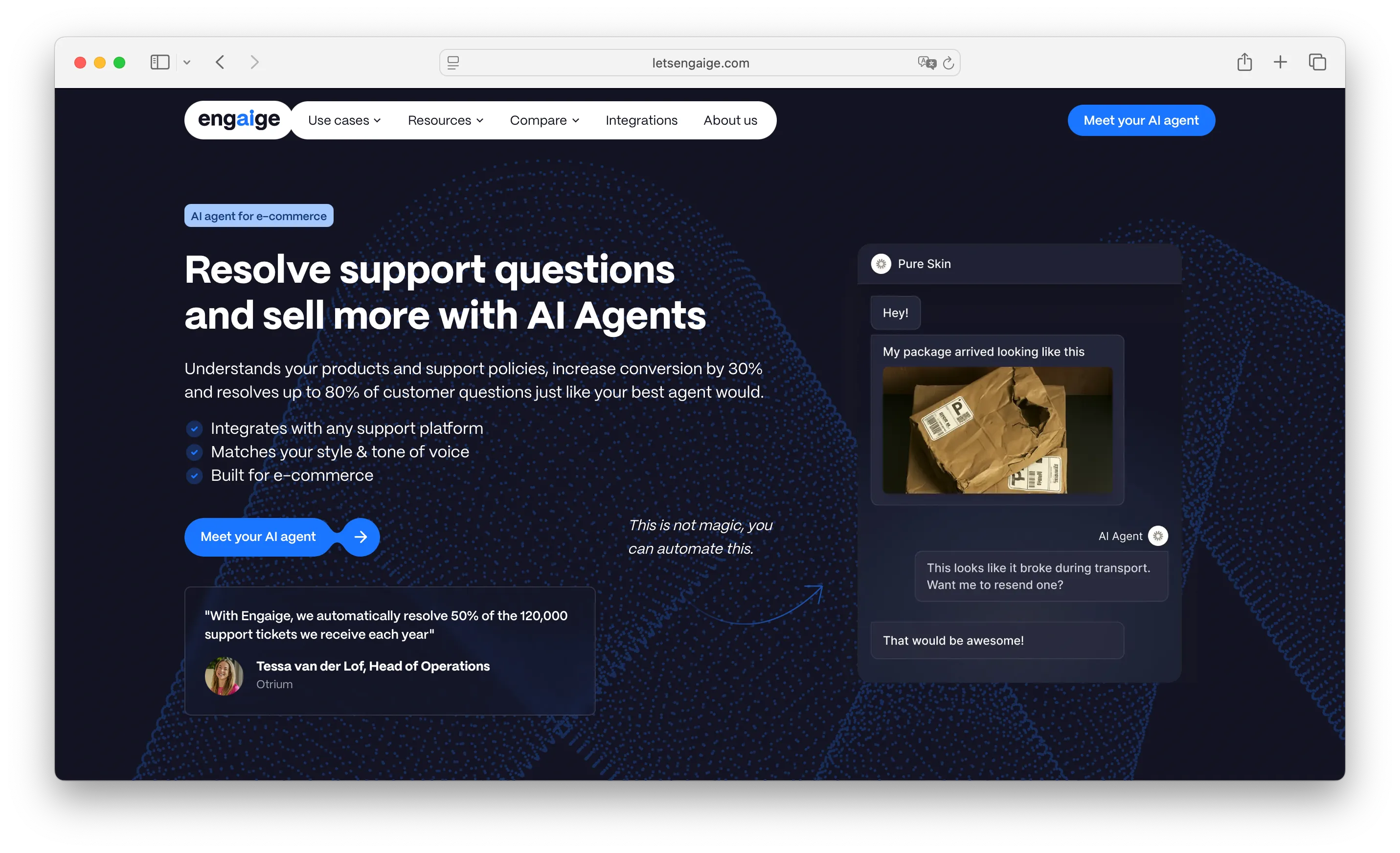
Engaige’s AI agent works well for eCommerce brands in fashion, beauty and consumer electronics because it’s designed around how support teams operate.
With Engaige you define what your AI agent is allowed to do. The agent uses your knowledge base, policies, order data and API endpoints. It follows your workflows and escalates to your team when human judgement is needed.
Across the brands Engaige works with, outcomes include:
- Teams feel lighter because the repetitive layer is gone
- Customers get faster, clearer answers
- Support becomes scalable and easier to manage, even in peak season
FAQs about scaling support without burning out your team
How can AI agents handle complex customer queries?
AI agents are designed to follow clear logic and policies. When a query requires judgement, negotiation or deeper empathy, the agent routes it to a human with full context included.
Will automation reduce the need for human agents?
Support automation reduces repetitive work, not human work. Most teams use AI to slow down hiring needs while reducing stress-inducing workload.
How do we train AI to understand our eCommerce processes?
With Engaige you can train your AI customer service agent on your policies, workflows, order data and API endpoints. During implementation you’ll test the agent weekly against real cases, refine behaviour and add guardrails.
Will AI agents sound robotic or hurt our brand tone?
With Engaige, you stay in control of tone of voice. The AI agent matches your brand guidelines so customers feel like they’re talking to your team.
Are AI agents reliable enough during critical peak moments?
Yes. When you launch ahead of peak season, you can let the AI agent handle only low-risk cases first, then expand as confidence grows.
How does automation help prevent burnout in support teams?
AI agents take over repetitive, high-volume tasks. By removing this constant mental load, your team gets more time for meaningful conversations and higher-impact work, reducing stress and fatigue.
Can AI reduce the pressure during seasonal peaks or unexpected spikes?
Yes. During high-volume periods, AI agents pick up extra volume of repetitive queries so your team doesn’t face unmanageable queues or extended shifts.
Will implementing AI create extra workload for my support team?
Not with Engaige. Setup focuses on existing policies and workflows while the AI handles repetitive tasks your agents would otherwise perform, reducing fatigue rather than adding burden.


